November 16, 2025
Nov 16, 2025
January 6, 2026
The Hidden Risks of Art Fair Insurance: Is Your Booth Covered?
By Bill Anderson
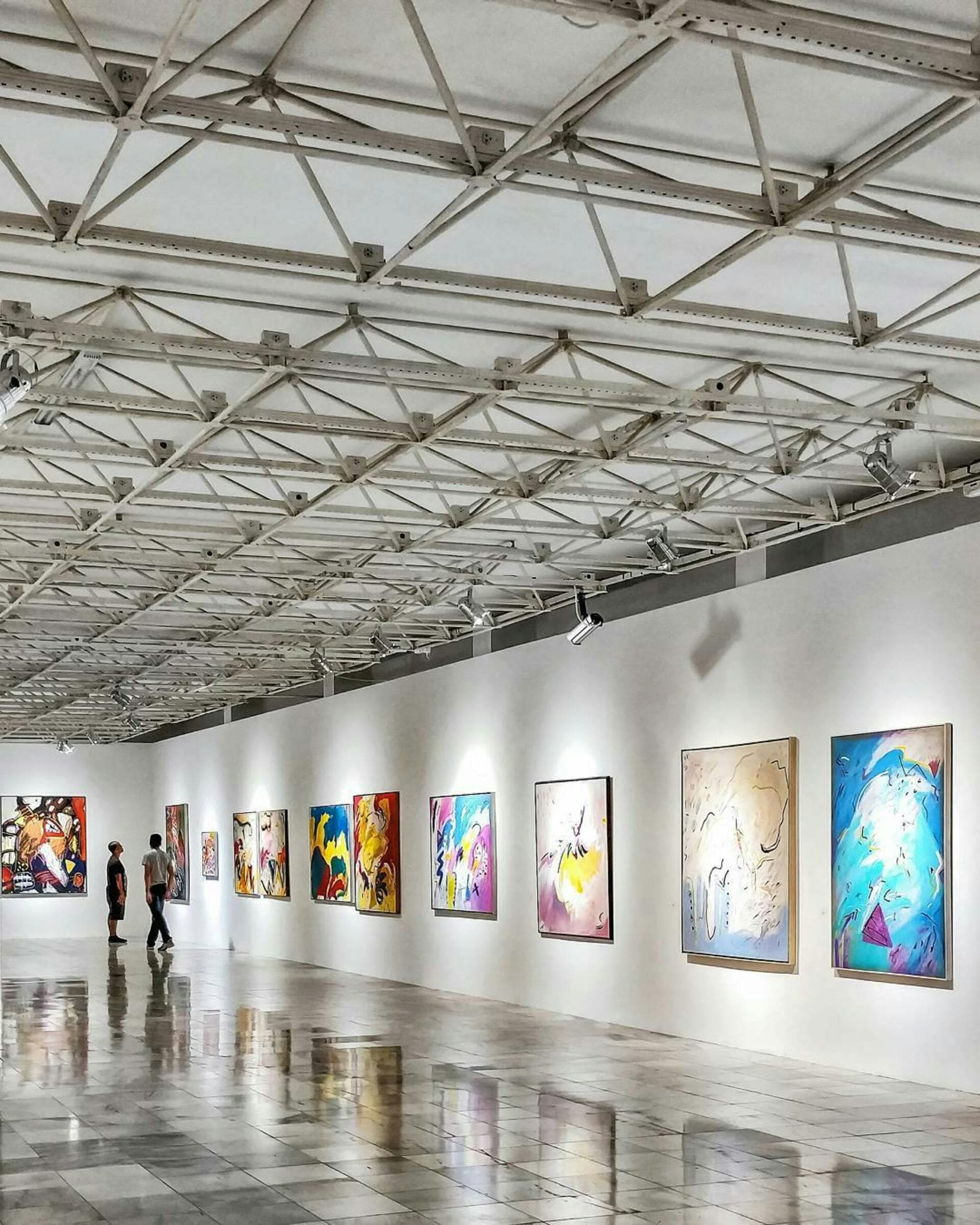
Protecting Your Assets from Transit to Display
Art fairs are a mix of high-stakes sales and frenetic energy. For collectors, it's exciting. For you? It's a vulnerability.
You’re taking your most valuable assets out of a controlled gallery environment and placing them in a temporary, high-traffic booth. You’re there to sell, but you can’t ignore the risk. You need to know if your art fair insurance actually covers you when it counts.
While policies protect you financially, they can’t physically stop a theft in a crowded booth. Knowing where your coverage ends and where physical security must begin is critical for any traveling exhibitor.
The Essentials of Art Fair Insurance
In the US art market, the gold standard for traveling exhibitions is often referred to as 'Nail-to-Nail' coverage. Your standard property policy probably only protects artwork while it sits in your gallery.
Robust art exhibition insurance, on the other hand, protects the work:
- From the moment it’s removed from your wall,
- Through the transit phase,
- During the exhibition, and
- Until it’s returned.
This continuity is critical. Statistics show that significant damage occurs while moving or installing the art, not while it hangs on the wall.
If your policy has a 'transit exclusion' or only covers the art once it’s 'on display,' you’re exposing yourself to massive liability during the shipping and setup phases.
General Liability and the Venue
While you worry about the art, the venue requires you to worry about the people. Most US art fairs (like The Armory Show or Art Basel Miami Beach) won’t let you open your crate without proof of Commercial General Liability (CGL) insurance.
However, CGL doesn’t cover the artwork. It covers you if, say, a collector trips over your lighting cord. And since lawsuits are common in the US market, this is non-negotiable.
The 'Daytime Gap' in Coverage
Event insurance for art exhibitions is a financial safety net; it’s not a force field. A policy might reimburse you for a stolen painting (minus the deductible), but it cannot recover the reputation lost when a piece disappears. Here the 'Daytime Gap' becomes a critical vulnerability.
At an art fair, perimeter security is often disarmed or bypassed during opening hours to allow visitors in. It creates a security vacuum. The assets are most vulnerable exactly when the people are present.
Distraction theft, where one person distracts the staff while another steals a small piece, is a prime threat in these crowded environments.
Bridging the Gap with Portable Security
Because insurance premiums are driven by risk, reducing that risk is the smartest way to protect your policy. To truly secure your booth and support your art fair insurance, you need a deterrent that works during the show. You need a tool like Art Guard’s MAP Systems.
Unlike complex alarm systems, the MAP Silver System is designed for portability. It’s a 'plug-and-play' solution ideal for temporary exhibitions.
- Quick Setup. You can set up sensors on every artwork in your booth in minutes.
- Immediate Deterrence. The Silver System focuses on the 'grab-and-run' threat. If a protected object is moved, it triggers a local audible alert immediately, startling the thief.
- No Touching. The sensor uses a passive magnet. No batteries or adhesives ever touch the art, a must for conservation standards.
FAQs about Art Fair Insurance and Security
Why isn't the art fair’s venue security enough to protect my booth?
Venue security typically focuses on the perimeter and overnight protection. However, during opening hours, the 'Daytime Gap' exists: the perimeter is open to visitors, creating a vulnerability.
Security guards cannot monitor every booth simultaneously, leaving individual exhibitors exposed to distraction theft or 'grab-and-run' tactics in crowded aisles.
How can I protect my art in a temporary booth without drilling holes or running wires?
You need a portable, wireless solution. The Art Guard MAP System is designed for this exact scenario. It’s a 'plug-and-play' system that uses wireless sensors and a local hub.
You can attach passive magnets to the artwork using conservation-safe methods, place the sensor behind the art or under a pedestal, and plug the hub into a standard outlet. No complex installation required.
Does my General Liability (GL) insurance cover stolen artwork?
Typically, no. General Liability generally covers bodily injury or property damage to others (e.g., a visitor tripping over a display stand). It protects you from lawsuits, not asset loss.
Theft of the artwork itself falls under your property or 'Fine Art' policy, which is why having specific coverage for the fair is essential.
Can I take the security system with me to different fairs?
Yes. Portability is an important requirement for traveling galleries. Systems like the MAP Silver are compact and don’t require internet configuration or on-site servers.
You can pack the hub and sensors into a carry-on case, fly to the next fair (e.g., from New York to Miami), and set it up immediately upon arrival.
Reducing Your Risk Profile
Insurance underwriters calculate risk. When you can demonstrate that you’ve mitigated the risk of theft with active protection, you position your business as a 'lower risk' client.
While art fair insurance papers protect your liability, physical protection preserves the art itself. Combine comprehensive coverage with object-specific security. This ensures the only things leaving your booth are sold pieces and happy collectors.
Don't leave your booth exposed.
CTA: Contact Art Guard today to secure your traveling collection.
Art Guard. Security that moves with you.
Subscribe to learn about the latest in Art Security Technology